
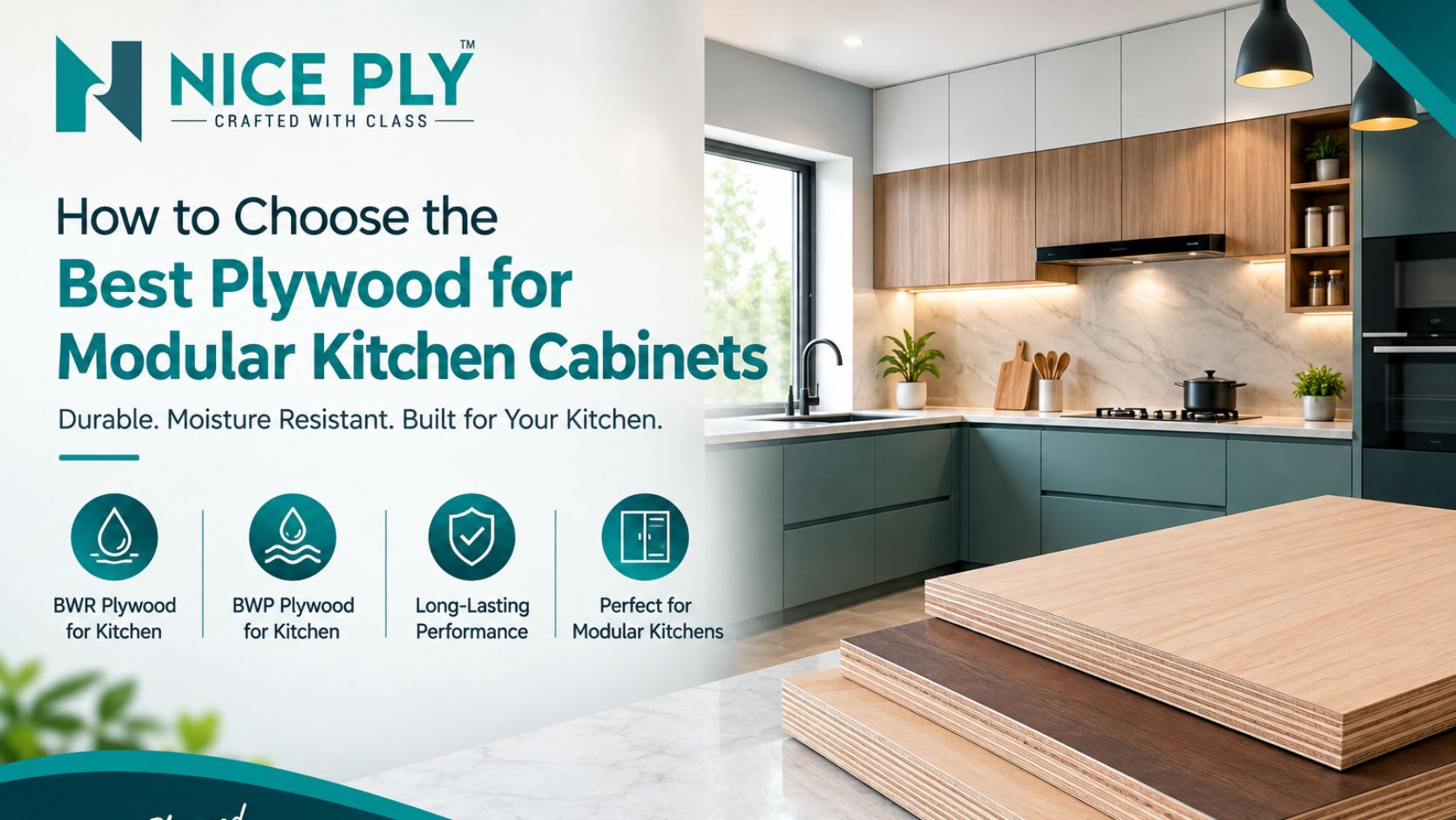
However, there is much more to a modular kitchen than just a beautiful design. Cooking on a regular basis results in exposure to moisture, steam, heat, spills, and frequent cleaning. Incorrect choice of plywood may result in swelling and delamination, thus reducing the durability of your cabinets. This is why it is important to choose the best plywood for modular kitchen cabinets so as to have a long-lasting, functional, and aesthetically pleasing kitchen.
Before making a purchase of plywood, take into consideration the kitchen plan, placement of cabinets, moisture exposure, and anticipated use of plywood, since at Nice Plywood we provide you with the best plywood for modular kitchens.
1. Understand the Difference Between BWR and BWP Plywood:
Although both are designed to handle moisture better than ordinary interior-grade plywood, their suitability depends on the application.
| Feature | BWR Plywood | BWP Plywood |
| Moisture resistance | Good resistance to moisture | Higher resistance to water exposure |
| Suitable applications | General kitchen cabinetry | Sink cabinets and moisture-prone areas |
| Best use | Cabinets away from frequent water contact | Areas requiring greater water resistance |
| Selection factor | Budget and expected exposure | Higher moisture exposure and durability needs |
However, no plywood should be considered completely waterproof under every condition. Prolonged water exposure, poor edge sealing, and plumbing leaks can damage even moisture-resistant boards.
2. Choose Plywood According to Cabinet Location:
Kitchen cabinets do not have the same conditions in all cases. Overhead cabinets normally have lower chances of getting wet, but base cabinets adjacent to sink areas have higher chances of getting affected by moisture.
- Overhead cabinets: Suitable moisture-resistant plywood should be selected that has sufficient strength for the loads.
- Base cabinets: BWR or BWP plywood can be considered according to moisture and use in the kitchen.
- Sink cabinets: BWP plywood is a better option for this section because there are chances of splashing water from the sink.
- Pantry units: Plywood should be chosen according to the required load capacity.
3. Check Plywood Quality Before Buying:
However, grade is just one factor that determines the overall performance of the plywood. It is recommended to examine the thickness, the surface finish, core construction, and bonding of the plywood before buying it. The plywood should have even layers and few spaces in the core.
The use of a reputable manufacturer and certification of the product according to the appropriate standards and grades will increase the service life of the cabinet.
4. Consider Long-Term Value, Not Just Price:
Though choosing cheap plywood will result in cutting down costs initially, it may prove to be expensive later if your cabinets need repairs due to early deterioration. Look at the product in terms of its moisture resistance, build quality, use, and life.
In an efficiently designed kitchen, choose the right grade of plywood for each cabinet section, rather than choosing a particular grade just based on its price.
Choose the Right Plywood for Your Kitchen with Nice Plywood
Making kitchen cabinets that are modular and durable requires picking the right plywood that is suited to Indian kitchens. Irrespective of whether you require BWR plywood for the kitchen or BWP plywood for the moisture-prone kitchen, the key consideration should be quality and correct installation. Check out the Best Plywood for Kitchen Cabinets from Nice Plywood.
Frequently Asked Questions (FAQs):
BWR plywood works well for many kitchen cabinets, but BWP plywood is better for kitchen areas that experience moisture.
Yes, BWR plywood can be used for kitchen cabinets if the quality of the product matches the conditions.
Yes, since BWP plywood is more resistant to moisture and thus better for kitchen sink cabinets.
It varies depending on the cabinet, its size, and load.